

HOME
/
Blog
/
Articles Insights

MV Mechanical Connectors 400–630 mm²: Shear‑Bolt IEC-61238 Compliance -- Jera Line Solutions

MV Mechanical Connectors 400–630 mm²: Shear‑Bolt IEC-61238 Compliance -- Jera Line Solutions
2026-07-03
|
MV Mechanical Connectors 400–630 mm²: Shear‑Bolt IEC-61238 Compliance -- Jera Line Solutions

Introduction: Why 400–630 mm² MV Mechanical Connectors Are Critical for Modern Power Grids

MV Electrical mechanical connectors for 400–630 mm² conductors are essential components in modern medium-voltage (MV) power distribution networks. As global utilities upgrade aging infrastructure, integrate renewable energy systems, and expand grid resilience, the demand for high-performance MV shear-bolt connectors continues to rise rapidly.

These connectors are not simple accessories—they are mission-critical electrical joints that directly impact system safety, transmission efficiency, and long-term reliability of power networks. A poorly designed connector can lead to:

  • Excessive contact resistance
  • Local overheating and thermal runaway
  • Energy losses and reduced efficiency
  • Mechanical failure under vibration or load cycling
  • Long-term grid instability

For this reason, utilities and EPC contractors increasingly rely on IEC-61238-1 type-tested mechanical connectors engineered for long service life under harsh electrical and environmental conditions.

In this guide, we will explore:
  • Engineering principles of MV mechanical connectors
  • Advantages of shear-bolt connector technology
  • IEC-61238-1 testing requirements
  • Installation best practices
  • Application scenarios in power infrastructure
  • How Jera Line provides factory-direct MV connector solutions for global projects

1. What Are MV Electrical Mechanical Connectors 400–630 mm²?

MV Electrical mechanical connectors are devices used to join conductors in MV networks without hydraulic crimping tools. Instead of compression dies and heavy crimping equipment, these connectors rely on mechanical shear‑bolt technology, which ensures consistent compression and electrical contact.

1.1 Key Function in MV Systems

In medium-voltage networks, connectors serve three critical roles:

  • Electrical continuity between conductors
  • Mechanical retention under stress and vibration
  • Stable low-resistance contact over decades

1.2 Typical Applications of 400–630 mm² Connectors

This conductor range is widely used in high-capacity electrical systems such as:

  • Primary distribution feeders (utility grids)
  • Substation transformer terminations
  • Ring Main Units (RMUs)
  • Wind and solar renewable energy farms
  • Industrial high-load distribution systems
  • Underground MV cable installations
  • Large interconnection points in transmission networks

Because these systems operate under continuous load, connectors must maintain stable thermal and electrical performance over long service lifetimes. Mechanical connectors in this size range are typically used for aluminum or copper conductors and must comply with international standards such as IEC‑61238‑1, which verifies their electrical and mechanical performance.

2. Why Shear-Bolt Mechanical Connectors Are Replacing Crimped Connectors

The global MV industry is transitioning from traditional crimped connectors to mechanical shear-bolt connectors due to improved reliability, consistency, and installation efficiency.

2.1 Elimination of Hydraulic Crimping Tools

Traditional crimping systems require:

  • Hydraulic press tools
  • Die sets for different conductor sizes
  • Regular tool calibration
  • Skilled operators

Mechanical connectors eliminate these requirements entirely. Installers only need a standard torque wrench, significantly reducing:

  • Equipment cost
  • Training time
  • Field complexity

This is especially important for remote substations, offshore installations, and emergency repairs.

2.2 Controlled Torque and Uniform Compression

Shear‑head bolts break at a calibrated torque, ensuring uniform compression and consistent electrical contact. This eliminates human error associated with incorrect crimping force or improper die selection. Each bolt is designed to:

  • Tighten to a precise torque value
  • Automatically shear when optimal pressure is achieved
  • Ensure repeatable installation quality

This eliminates human error, which is a major failure cause in crimped systems.

2.3 Wide Conductor Range Flexibility (400–630 mm²)

A single connector covers multiple conductor sizes — in this case, 400–630 mm² — reducing inventory and simplifying procurement. Utilities and EPC contractors benefit from:

  • Lower stock requirements
  • Simplified logistics
  • Faster project deployment

2.4 Reliable Electrical Performance

Properly engineered shear-bolt connectors provide:

  • Low and stable contact resistance
  • Reduced thermal rise under load
  • Improved current-carrying performance
  • Long-term electrical reliability

This ensures stable operation even in fluctuating renewable energy environments.

2.5 Faster Installation and Reduced Downtime

Mechanical connectors significantly reduce installation time:

  • No hydraulic setup required
  • No die changes between conductor sizes
  • Minimal tool preparation

This leads to faster commissioning of substations and distribution networks.

2.6 Lower Skill Requirements

Unlike crimping systems that require trained operators, shear-bolt connectors can be installed by technicians with basic electrical training. This is particularly valuable for:
  • Developing grid infrastructure
  • International EPC projects
  • Large workforce deployments

3. Key Design Features of 400–630 mm² Mechanical Connectors

High‑quality electrical mechanical connectors 400–630 mm² share several engineering characteristics that ensure long‑term reliability.

3.1 Tin‑Plated Aluminum Body

Tin‑plated aluminum offers:

  • High electrical conductivity
  • Corrosion resistance
  • Compatibility with both aluminum and copper conductors
  • Reduced risk of galvanic corrosion

This material combination ensures stable performance in both indoor and outdoor MV installations.

3.2 Shear‑Head Bolt Torque Zone Technology

Share-head bolts torque zone technology ensure uniform compression along the conductor, reducing the risk of hot spots and improving long‑term stability. The bolt design ensures:

  • Correct torque application
  • Automatic shear‑off when fully tightened
  • Consistent installation quality
  • Reliable long-term contact stability

3.3 Internal Barrel Geometry

Precision‑machined internal profiles grip the conductor evenly, preventing pull‑out during mechanical stress or thermal expansion. The internal teeth or serrations ensure:

  • Strong conductor grip
  • High pull-out resistance
  • Low contact resistance
  • Stable performance under thermal expansion

3.4 Environmental Protection and Durability

MV connectors must operate in harsh conditions such as:

  • Coastal salt fog environments
  • High humidity regions
  • Industrial pollution zones
  • Temperature extremes

High-quality coatings prevent oxidation and corrosion, ensuring long service life.

3.5 Compatibility with MV Cable Types

Connectors must be compatible with:

  • Stranded aluminum conductors
  • Stranded copper conductors
  • Sector‑shaped conductors
  • Round conductors
  • XLPE‑insulated MV cables

This flexibility makes mechanical connectors ideal for global utility networks.

4. IEC-61238-1 Standard: The Global Benchmark for MV Mechanical Connectors

For any connector used in MV networks, IEC‑61238‑1 is the most important certification. It verifies both electrical and mechanical performance under real‑world conditions.

4.1 What IEC‑61238‑1 Evaluates

The standard includes:

  • Temperature rise performance
  • High‑current cycling endurance
  • Contact resistance stability
  • Tensile strength and pull‑out resistance
  • Structural integrity under mechanical stress
  • Visual inspection after testing

4.2 Why IEC Compliance Is Critical

Utilities and EPC contractors require IEC‑61238 compliance to ensure connectors can withstand decades of service without failure. Passing this test demonstrates:

  • Long-term operational reliability
  • Reduced failure risk
  • Safety under fluctuating loads
  • Compliance with global procurement standards
  • Lower maintenance costs

4.3 Type‑Test vs. Routine Test

  • Type‑test: Performed once to validate the design.
  • Routine test: Performed on every batch to ensure consistent quality, which has been done in Jera Line's in-house laboratory.

5. IEC Current Cycling Test: Real-World Simulation of Grid Conditions

The current cycling test is one of the most demanding parts of IEC‑61238‑1. It simulates real‑world load variations where connectors experience repeated heating and cooling cycles.

5.1 Purpose of the Test

  • Verify thermal endurance
  • Confirm stable contact resistance
  • Ensure mechanical grip remains secure
  • Detect any degradation over time

5.2 How the Test Works

  • Connector installed on test conductor
  • High current applied to heat system
  • Cooling cycles applied
  • Repeated heating and cooling cycles

5.3 Passing Criteria

A connector passes if:

  • Temperature rise remains within limits
  • Contact resistance stays stable
  • No mechanical loosening occurs
  • No visible damage or deformation appears

For electrical mechanical connectors 400–630 mm², passing this test demonstrates suitability for heavy‑duty MV applications.

6. Mechanical Type Tests for 400–630 mm² Connectors

Beyond electrical tests, IEC‑61238 includes mechanical evaluations:

  • 6.1 Tensile Strength / Pull‑Out Test: Ensures the conductor remains securely fixed under mechanical stress.
  • 6.2 Bolt Torque Verification: Confirms shear‑head bolts break at the correct torque, guaranteeing proper installation.
  • 6.3 Structural Integrity: Validates durability during installation and long‑term service.
  • 6.4 Visual Inspection: Checks for cracks, deformation, or improper shear‑off.

7. Applications of 400–630 mm² Mechanical Connectors

  • 7.1 Substations: Used for transformer bushings, switchgear terminations, and busbar connections.
  • 7.2 RMUs (Ring Main Units): Ideal for compact MV switchgear where reliable terminations are essential.
  • 7.3 Renewable Energy: Solar farms and wind turbines often use large‑size conductors requiring robust connectors.
  • 7.4 Industrial Power Distribution: Factories and heavy‑load facilities rely on stable MV connections.
  • 7.5 Underground Cable Networks: Mechanical connectors simplify installation in confined underground spaces.

8. Introducing Jera Line: A Direct MV Connector Manufacturer in China

Jera Line is a direct factory specializing in medium‑voltage cable accessories, including:

With years of experience supplying utilities and EPC contractors worldwide, Jera Line focuses on:

Jera Line’s MV connectors are designed to perform in demanding environments, providing safe and dependable connections for critical power infrastructure.
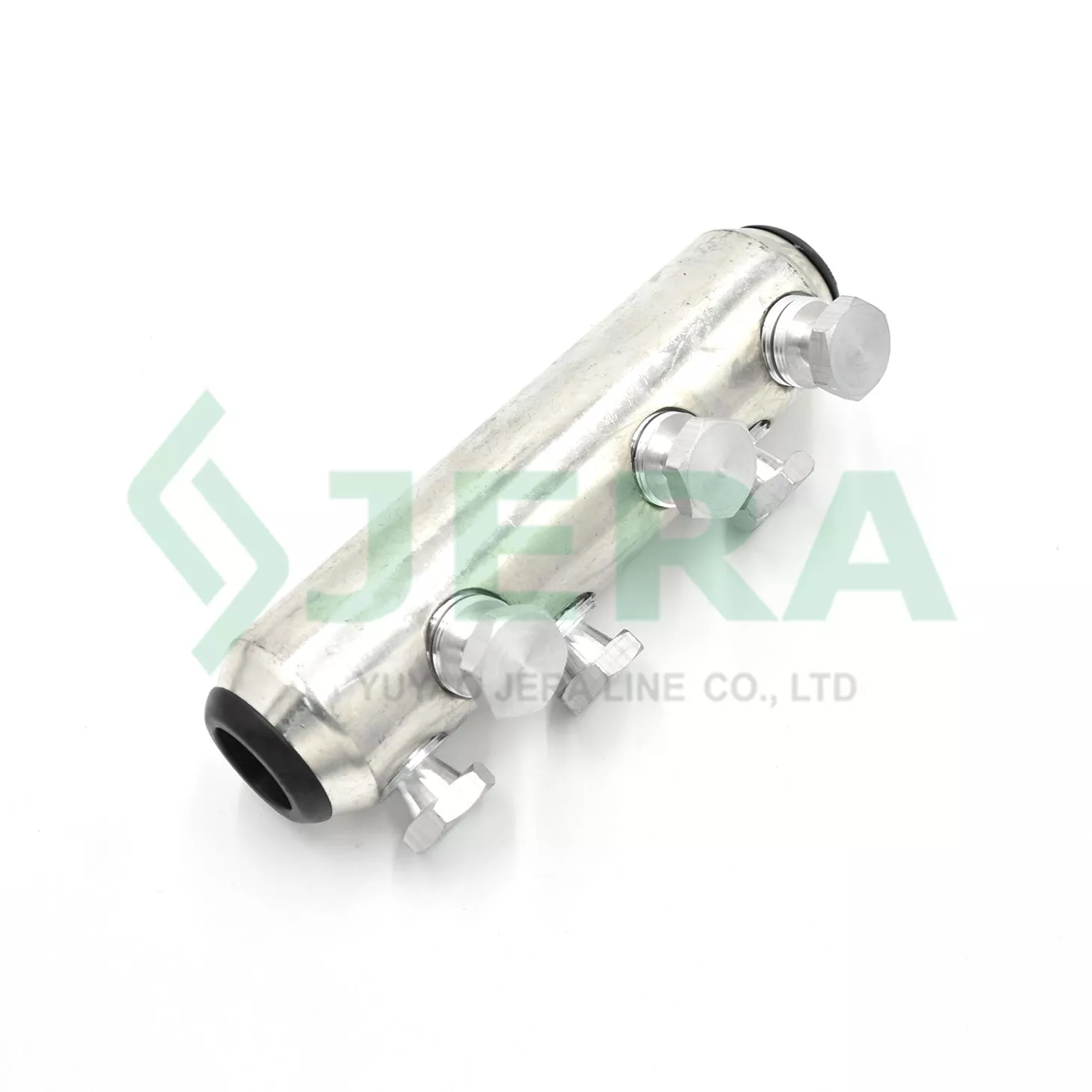
9. Jera Line’s MV Cable Shear‑Bolt Connector Solutions

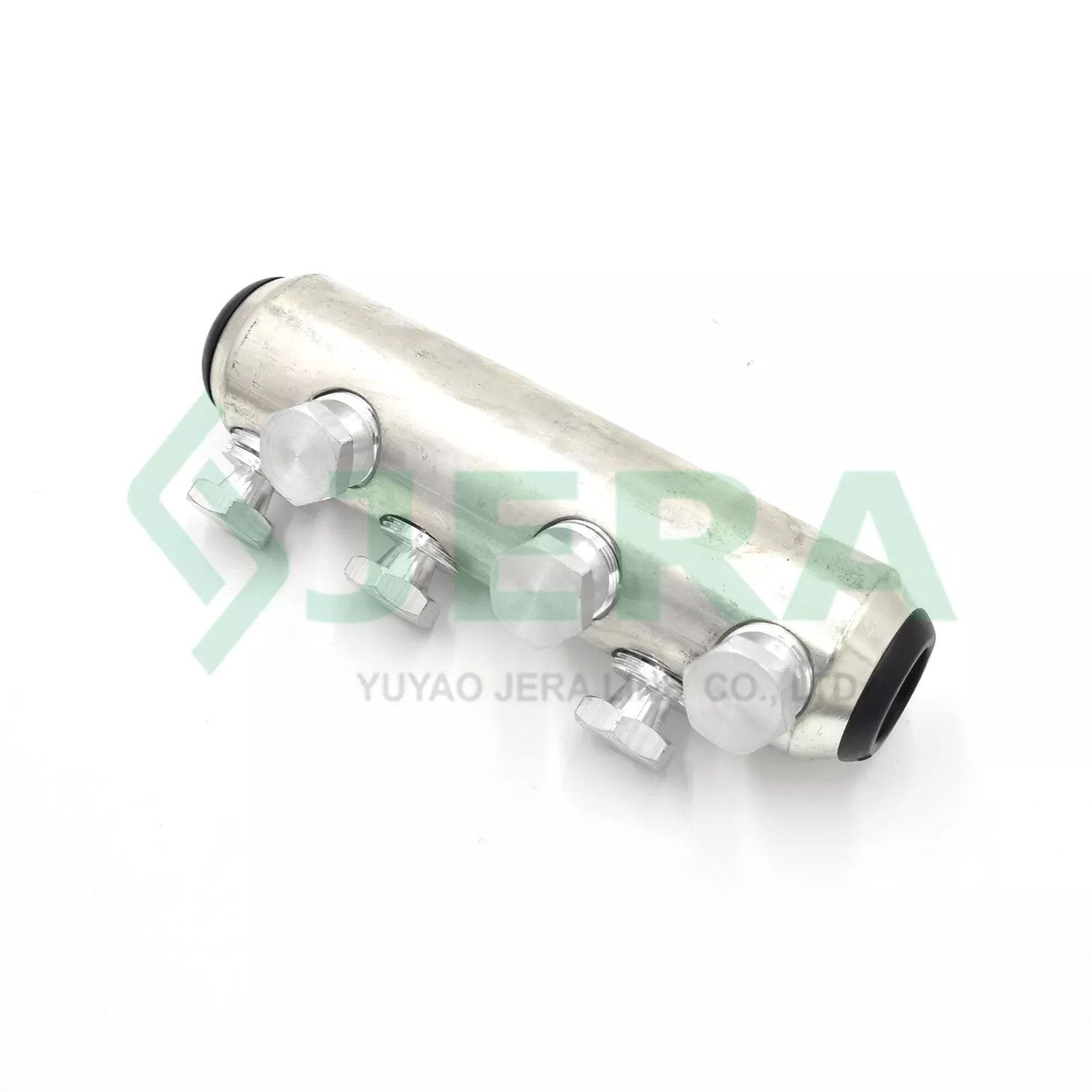
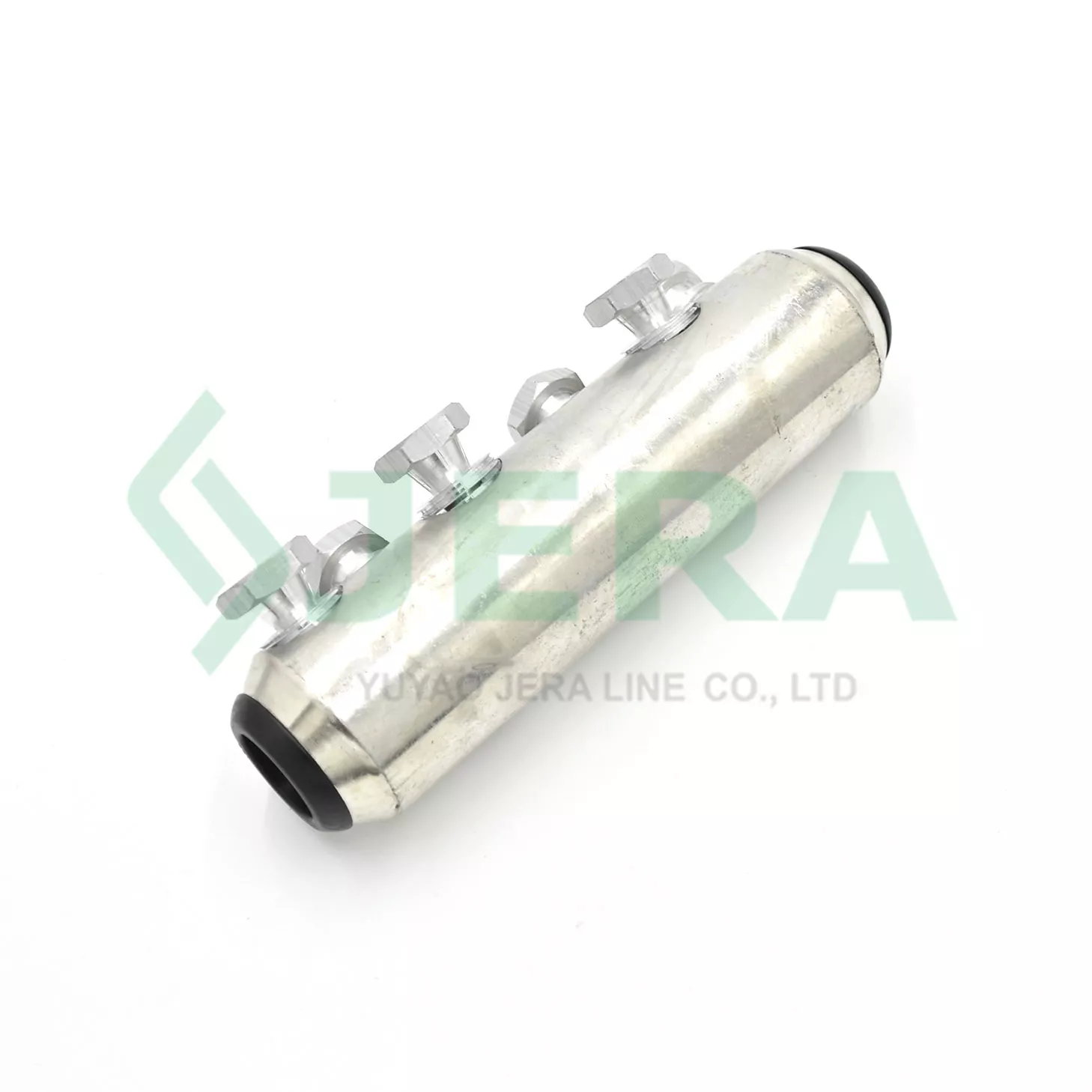
Jera Line manufactures a full range of MV mechanical connectors, including the CCBVzT‑36‑6‑400‑630, an IEC‑61238 tested connector designed for 400–630 mm² aluminum or copper conductors.

9.1 Key Features

  • High‑conductivity, tin‑plated aluminum body
  • Centered palm design for stable mounting
  • Wide conductor range: 400–630 mm²
  • No crimping tools required — installation with standard wrenches
  • Corrosion‑resistant materials suitable for harsh environments
  • Competitive pricing directly from Jera Line’s factory

9.2 IEC‑61238‑1 Type Testing

Passing all these tests confirms that Jera Line’s connectors meet the highest standards of IEC-61238 for utility‑grade MV applications.

10. Why Utilities Choose Jera Line’s MV Mechanical Connectors

Utilities and EPC contractors choose Jera Line because we offer:

  • Reliable, type‑tested MV connection solutions
  • Consistent quality and competitive pricing
  • Fast production and global delivery
  • Engineering support and customization
  • Long‑term product stability backed by rigorous testing

Our connectors are designed to perform in demanding environments, providing safe and dependable connections for critical power infrastructure.

11. Conclusion

Electrical mechanical connectors for 400–630 mm² conductors are essential building blocks of modern medium-voltage infrastructure. As global energy systems transition toward smarter, more resilient grids, the importance of reliable, standardized, and type-tested connectors continues to grow.

IEC-61238-1 compliance ensures performance consistency under real-world electrical stress, while shear-bolt technology provides a safer, faster, and more efficient installation method compared to traditional crimping systems.

Jera Line delivers factory-direct MV shear-bolt connectors engineered for global utility requirements, combining performance reliability, cost efficiency, and engineering precision.

As MV networks expand worldwide, high-quality mechanical connectors will remain a critical foundation for safe and efficient power distribution. Welcome to contact us if you have any inquiries!


 Comments
Leave a Comment
Your email address will not be published. Required fields are marked *
Submit Comment
CONTACT US NOW
Fill this form for quick answer within 12 hours
Send
You May Be Interested...
WhatsApp us
Quote Now
info@jera-energy.com
+86 (574) 6266 2200
Catalog
© 2024-2026 YUYAO JERA LINE CO.,LTD
Document
Fill this form for quick answer within 24 hours
Send
Contact us now
Document