





About this guide: This content compiles industry standards, technical specifications, practical application cases, and our years of professional experience in the field of power connections. We hope that this comprehensive resource will help you better understand and apply the relevant knowledge of LT lines, HT lines, and transmission lines.
Who this guide is for: This content is designed for electrical engineers, power system planners, project managers, electrical contractors, power facility maintenance personnel, and students and researchers in related fields. Whether you are planning a new power infrastructure project or need to select suitable cable connection solutions for existing systems, this guide will provide you with valuable reference information and practical guidance. It is also an ideal learning resource for any professional who needs to understand the fundamentals of power distribution.
In the complex ecosystem of electrical distribution, power lines are categorized by the voltage levels they carry. Understanding these distinctions is crucial for electrical engineers, project managers, and anyone involved in power infrastructure development. The three primary categories are LT (Low Tension) lines, HT (High Tension) lines, and Transmission Lines, each serving distinct purposes in the electricity delivery chain from generation to end consumption.
The choice between LT, HT, and transmission lines depends on multiple factors including distance to cover, power capacity requirements, terrain conditions, and budget constraints. Each voltage level represents a trade-off between transmission efficiency, infrastructure costs, and safety considerations.
Jera Line has extensive experience producing Low and Medium Voltage power cable connectors for overhead and underground cables. This comprehensive guide explores the technical specifications, applications, and connection solutions for each voltage category, helping you make informed decisions for your power distribution projects.
LT lines are low voltage based lines used for distributing electricity at levels up to 1 kV (1000V) to residential, small industrial, and commercial consumers. These lines form the final link in the power delivery chain, bringing electricity directly to end-users. In many countries, LT distribution networks serve as the backbone of urban and rural electrification, connecting millions of consumers to the main power grid.
While LT lines carry lower voltage than HT or transmission lines, they still pose significant electrical hazards. Always ensure proper installation by certified electricians and comply with local electrical codes. Direct contact can cause severe injury or fatal electrocution.
| Parameter | Specification | Details |
|---|---|---|
| Voltage Range | Up to 1 kV | 230V (single-phase), 415V (three-phase) |
| Frequency | 50/60 Hz | Standard power frequency |
| Current Capacity | Up to 1000A | Varies by conductor size |
| Conductor Size | 16-400 mm² | Aluminum or Copper |
| Installation | Overhead/Underground | Both methods common |
Domestic power supply for single-family homes, apartments, and residential colonies. Typically supplies lighting, heating, cooling, and appliance circuits.
Office buildings, retail stores, restaurants, and small commercial establishments requiring reliable power for lighting, HVAC, and business equipment.
Small-scale manufacturing units, workshops, and production facilities with moderate power requirements typically below 100 kW.
Street lighting, traffic signals, public park electricity, and community facilities serving the general public.
Jera Line offers a comprehensive range of connection solutions specifically designed for low voltage power distribution systems. Our products meet international standards and are engineered for reliable performance in diverse environmental conditions.
Products like helical wire dead end guy grips and tension clamps are essential for securely anchoring and suspending overhead cables. These components provide mechanical support while maintaining electrical continuity, ensuring long-term reliability of overhead LT distribution lines.
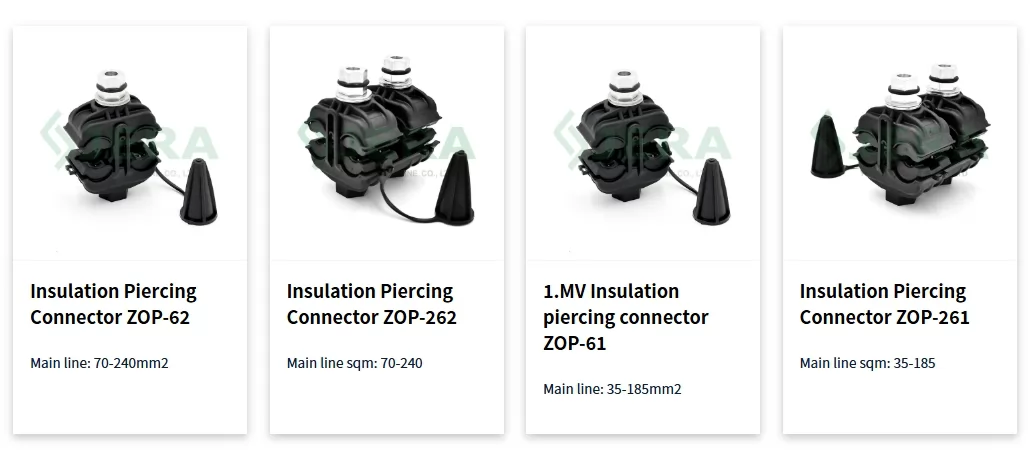
Insulation Piercing Connectors enable quick and reliable connections for both bare and insulated cables without requiring complete cable stripping. This technology reduces installation time and ensures consistent connection quality across various cable types.
Surge arresters and overvoltage protection holders safeguard sensitive electrical equipment from transient voltage spikes caused by lightning, switching operations, or grid disturbances. Essential for protecting consumer electronics and appliances.
Pre-insulated cable sleeves and lugs ensure secure termination and connection of cables, preventing corona discharge, moisture ingress, and mechanical failure at cable ends and joints.
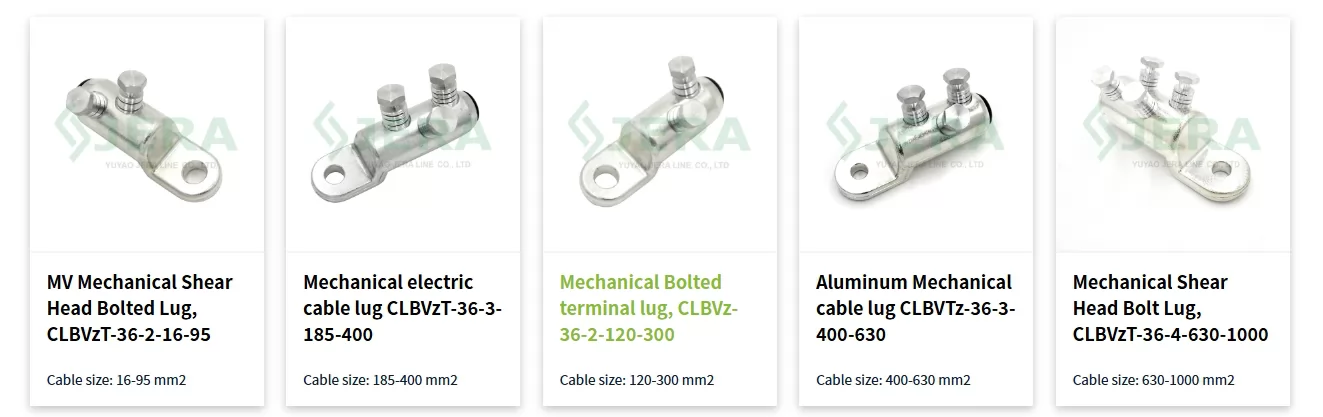
Shear head bolted mechanical cable lugs and connectors provide reliable connections for low voltage underground cable networks and indoor installations where space constraints and safety requirements demand compact, secure solutions.
HT lines carry electricity at higher voltage levels, typically ranging from 11 kV to 33 kV. These lines bridge the gap between primary transmission networks and local distribution systems, supplying power to industrial facilities, large commercial establishments, and substations that feed LT networks. The elevated voltage significantly reduces current flow for the same power level, enabling more efficient power transfer over moderate distances.
The relationship between voltage and current for a given power level is governed by P = V × I. By increasing voltage from 415V (LT) to 33kV (HT), current flow decreases by approximately 80 times, dramatically reducing resistive losses (I²R) and enabling smaller conductor sizes for the same power transmission capacity.
| Parameter | Specification | Details |
|---|---|---|
| Voltage Range | 11 kV - 33 kV | Medium voltage classification |
| Common Voltages | 11kV, 22kV, 33kV | Regional variations exist |
| Transmission Distance | 5-50 km | Without intermediate stations |
| Substation Requirement | Step-down transformer | Essential at consumer end |
| Insulation Level | Higher than LT | Enhanced safety requirements |
Large industrial plants including steel mills, cement factories, petrochemical facilities, and manufacturing units requiring power levels from 500 kW to 10 MW or more.
Hospitals, data centers, telecommunications facilities, and other mission-critical installations requiring high reliability and power quality.
Large-scale agricultural operations including irrigation systems, processing facilities, and farming cooperatives with significant power demands.
Primary distribution to neighborhood substations that further step down power for residential and commercial consumption in urban areas.
Jera Line specializes in medium voltage cable connection solutions designed for HT applications. Our products are manufactured to international standards and undergo rigorous quality testing to ensure reliable performance in demanding industrial environments.
Insulation piercing connectors for medium voltage are specifically designed for MV ABC (Aerial Bundled Cable) systems. These connectors provide reliable, weather-resistant connections for cables rated up to 36kV, featuring:
Mechanical cable connectors ensure secure, reliable electrical connections in medium voltage power distribution systems up to 36kV. Key features include:
Mechanical cable lugs are essential components in 36kV power distribution systems, providing reliable termination points for cables connecting to transformers, switchgear, and other equipment. Applications include:
Transmission lines are responsible for carrying electricity over long distances from power generation plants to substations before distribution. These operate at extra-high voltage (EHV) levels, typically 66 kV and above, reaching up to 765 kV in some countries. The ultra-high voltage dramatically reduces current flow, enabling efficient bulk power transfer over hundreds or even thousands of kilometers with minimal losses.
The highest voltage transmission lines operate at up to 1,200 kV (UHV-DC) in countries like China, transmitting power over distances exceeding 2,000 km. This enables efficient transfer of renewable energy from remote generation sites (hydro, wind, solar) to major population centers.
| Transmission Level | Voltage Range | Typical Applications | Approximate Distance |
|---|---|---|---|
| High Voltage (HV) | 66 kV - 150 kV | Regional transmission, interconnections | 50-150 km |
| Extra-High Voltage (EHV) | 220 kV - 500 kV | Long-distance bulk transfer | 150-500 km |
| Ultra-High Voltage (UHV) | 765 kV and above | National/international grids | 500+ km |
| HVDC | Varies (±500 kV to ±1100 kV) | Undersea, asynchronous links | 1000+ km |
132 kV and above - Transfers power between major generation stations and primary substations. These lines form the backbone of national power grids, carrying bulk power from hydroelectric dams, thermal power plants, and large renewable installations to regional distribution networks.
66 kV to 132 kV - Distributes power between major substations before final delivery to distribution networks. These lines feed large industrial areas, regional distribution companies, and intermediate voltage substations that further step down power for local use.
Interconnecting regional grids to balance supply and demand across large geographic areas, enabling power sharing between regions with different generation mixes and load patterns.
International interconnections enabling power trade between countries, sharing renewable energy resources, and improving grid reliability through diversified generation sources.
Transmitting power from remote renewable generation sites - offshore wind farms, large solar installations in deserts, and hydroelectric projects in mountainous regions - to population centers.
Providing redundancy and alternative power pathways to maintain grid stability during local generation shortfalls, equipment failures, or extreme weather events.
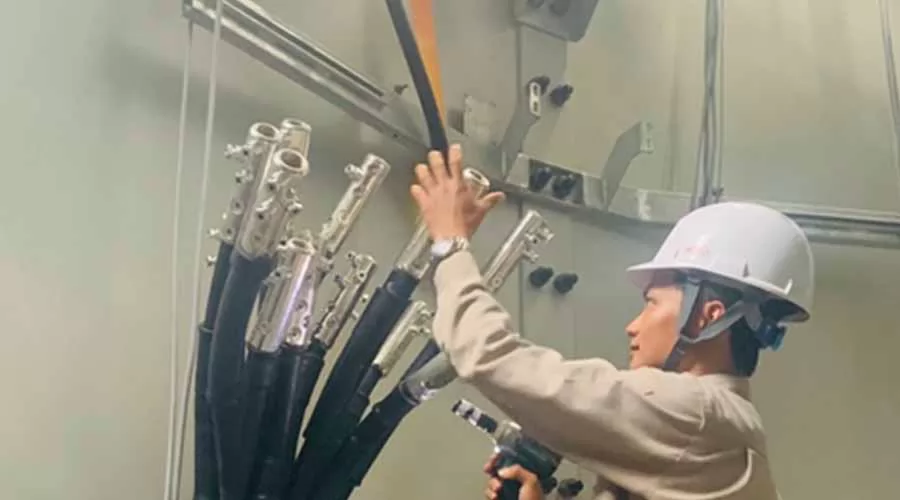
While Jera Line primarily focuses on Low and Medium Voltage solutions, our expertise in electrical connection technology supports the broader power ecosystem. For EHV transmission line connections, specialized manufacturers and stringent international standards apply. Contact our team for guidance on connecting distribution networks to transmission infrastructure.
Understanding the differences between LT, HT, and transmission lines is essential for proper system design and component selection. The following detailed comparison highlights key parameters across all three categories.
| Feature | LT Line (Low Tension) | HT Line (High Tension) | Transmission Line |
|---|---|---|---|
| Voltage Range | Up to 1 kV (1000V) | 11 kV - 33 kV | 66 kV and above (up to 765 kV+) |
| Primary Purpose | Local distribution to end consumers | Industrial and commercial power supply | Long-distance bulk power transfer |
| Power Loss Level | Higher (5-10% over typical distances) | Moderate (3-5% over typical distances) | Low (under 3% for well-designed systems) |
| Typical Distance | Up to 5 km from substation | 5-50 km from source | 50-2000+ km |
| Common Applications | Homes, shops, small industries | Large industries, commercial buildings, hospitals | Power plants to substations, national grid |
| Infrastructure | Poles, cables, underground conduits | High-capacity cables, towers, substations | Steel lattice towers, large conductors, series compensation |
| Installation Cost | Lowest | Moderate | Highest |
| Transformer Required | At distribution level (if fed from HT) | Essential at consumer end | Step-up at generation, step-down at substations |
| Safety Clearance | Standard electrical clearances | Enhanced clearances required | Extensive right-of-way required |
| Jera Line Products | Full range available | Full range available | Specialized solutions available |
While transmission lines have the highest initial investment, they offer the lowest cost per kilowatt-hour transmitted over long distances. For industrial applications requiring substantial power, HT connections often provide the best balance of cost and efficiency. LT connections remain the most economical solution for standard residential and commercial needs.
Selecting the appropriate voltage level for a power distribution system involves careful consideration of multiple factors. This guide provides practical recommendations for various scenarios.
| Load Requirement | Recommended Voltage | Typical Connection | Notes |
|---|---|---|---|
| Residential (up to 10 kW) | LT (230V/415V) | Single-phase or three-phase LT | Standard residential connection |
| Small Commercial (10-50 kW) | LT (415V) | Three-phase LT | May require dedicated transformer |
| Medium Industrial (50-500 kW) | HT (11-33 kV) | Direct HT connection with on-site substation | Requires utility approval |
| Large Industrial (500 kW - 5 MW) | HT (33 kV) | Dedicated HT substation | Economical for high-demand facilities |
| Heavy Industry (5+ MW) | HT/Transmission (33-132 kV) | Direct transmission connection | Requires utility-level infrastructure |
Electrical installations must comply with relevant safety standards and regulations to protect personnel, equipment, and the public. Below are key standards applicable to LT, HT, and transmission systems.
Working with electrical systems requires proper training, certification, and personal protective equipment (PPE). Always follow lockout/tagout procedures, verify system de-energization before work, and comply with local electrical safety regulations. When in doubt, consult a licensed electrical engineer or qualified contractor.
The primary difference is the voltage level and intended application. LT (Low Tension) lines operate at voltages up to 1 kV and are used for final distribution to end consumers - homes, shops, and small businesses. HT (High Tension) lines operate at 11-33 kV and are used for supplying large consumers and feeding distribution transformers. The higher voltage of HT lines allows for more efficient power transfer over longer distances with lower losses compared to LT systems.
Different voltage levels optimize power delivery at different stages of the distribution chain. High voltages (transmission level) minimize losses when moving large amounts of power over long distances. Medium voltages (HT) balance efficiency with accessibility for large consumers. Low voltages (LT) provide safe, usable power for everyday consumer applications. This tiered approach is the most economical way to deliver electricity from generation to end use.
Jera Line specializes in Low Voltage (LV up to 1kV) and Medium Voltage (MV 1-36kV) power cable connection solutions. Our product range includes overhead line hardware (anchors, suspension units, tension clamps), insulation piercing connectors, overvoltage protection devices, and cable termination/connection products for both overhead and underground cable systems.
Consider these factors: (1) Voltage rating - ensure connector rating meets or exceeds system voltage, (2) Cable type - specify conductor material (Al/Cu), insulation type, and cable size, (3) Application - overhead vs underground, (4) Environmental conditions - temperature range, UV exposure, moisture, (5) Mechanical requirements - tensile strength and vibration resistance. Consult our product catalogs or contact our technical team for specific recommendations.
Common causes include: (1) Overloading beyond designed capacity, (2) Poor connection quality leading to overheating, (3) Environmental factors - lightning, wind, ice, flooding, (4) Aging infrastructure and degradation of insulation, (5) Mechanical damage from construction or accidents, (6) Wildlife interference, (7) Utility grid instability. Regular inspection and quality connection components from reputable manufacturers like Jera Line help minimize these risks.
Yes, Jera Line offers products designed for both overhead and underground cable systems. Our overhead line products include anchor clamps, suspension units, tension clamps, and insulation piercing connectors. Our underground solutions include shear head bolted mechanical cable lugs, pre-insulated sleeves, and specialized termination kits. Some products are versatile enough for both applications. Check individual product specifications for application suitability.
Transmission lines carry bulk power at high voltages (66kV and above) over long distances from generation plants to substations. Distribution lines (HT and LT) carry power from substations to end users at lower voltages. Transmission lines use large towers and bare conductors optimized for maximum efficiency, while distribution lines use smaller poles/cables and often include insulation for safety in populated areas.
Understanding the distinctions between Low Tension (LT), High Tension (HT), and Transmission lines is fundamental to designing and maintaining efficient electrical distribution systems. Each voltage level serves a critical role in the electricity delivery chain, from bulk power transfer over hundreds of kilometers to safe, reliable power delivery to homes and businesses.
Jera Line is your trusted partner for LT and HT line connection solutions. From overhead anchor and suspension systems to insulation piercing connectors and cable termination products, we offer reliable, high-quality components designed for the demanding requirements of modern power distribution systems. Our technical team is ready to assist you in selecting the right products for your specific applications.
Contact Jera Line today for expert guidance on LT and HT line connection solutions tailored to your specific requirements.
Request Technical Consultation












.png)