





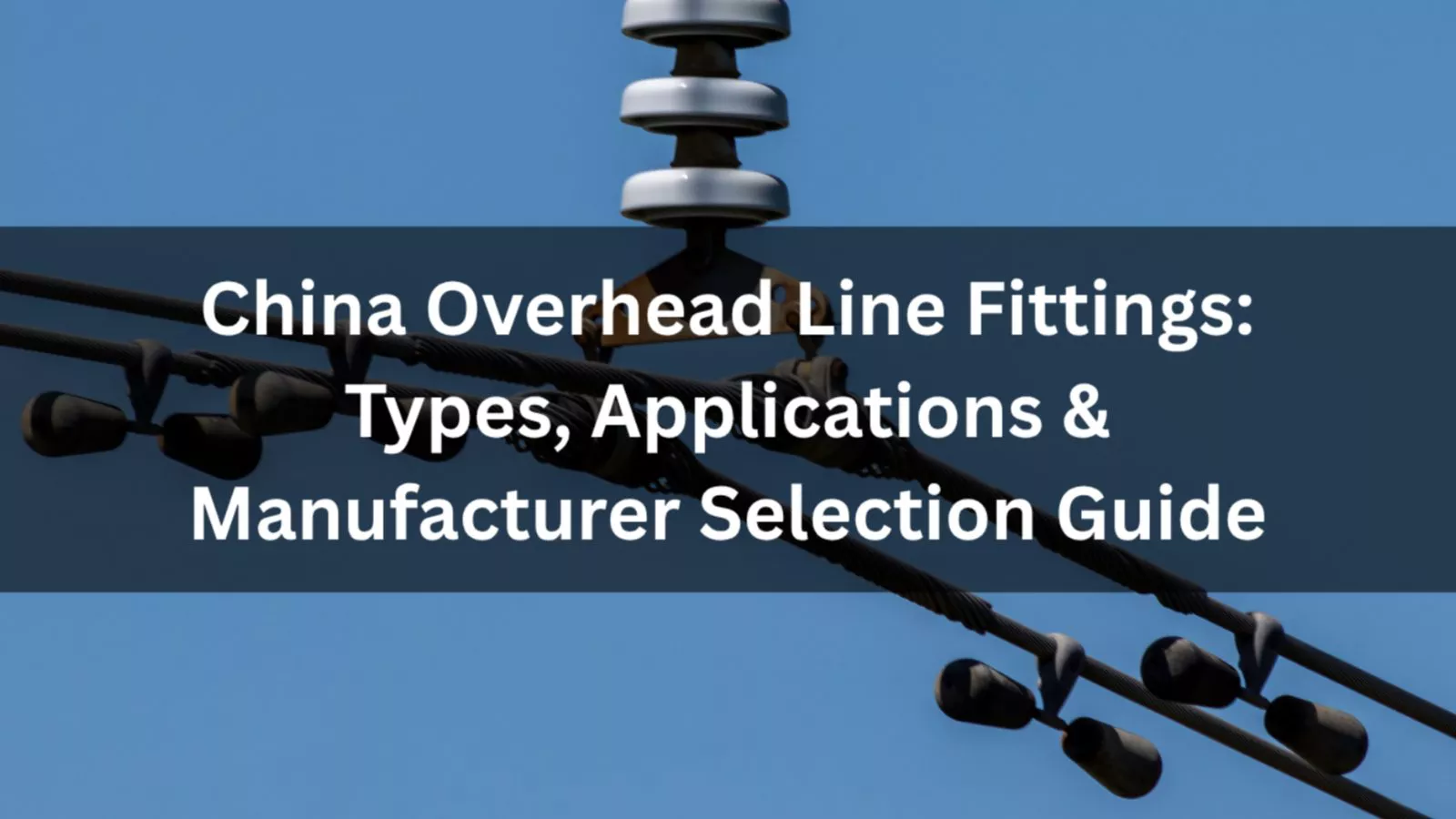
Are you looking for reliable China overhead line fittings for low voltage distribution networks, aerial bundled cable systems, utility projects or outdoor power infrastructure? Choosing the right supplier requires more than comparing product prices. Overhead line fittings must provide reliable mechanical support, stable electrical performance and long-term resistance to outdoor environmental conditions.
High-quality overhead line fittings should be selected according to the cable type, conductor size, installation method, voltage level, mechanical loading and environmental conditions of the project. Different applications may require anchoring clamps, suspension clamps, insulation piercing connectors, pre-insulated connectors, cable lugs, brackets, stainless steel banding systems or other accessories. A fitting suitable for one overhead network may not be appropriate for another cable configuration or installation environment.
This comprehensive guide explains the main types, applications and selection factors for China overhead line fittings. It also explains what to consider when choosing a Chinese manufacturer, including product compatibility, material quality, testing capabilities, international standards, OEM support and manufacturing experience. Whether you are a utility contractor, electrical distributor, EPC company or power infrastructure buyer, this guide can help you identify the right overhead line fitting supplier for your project.
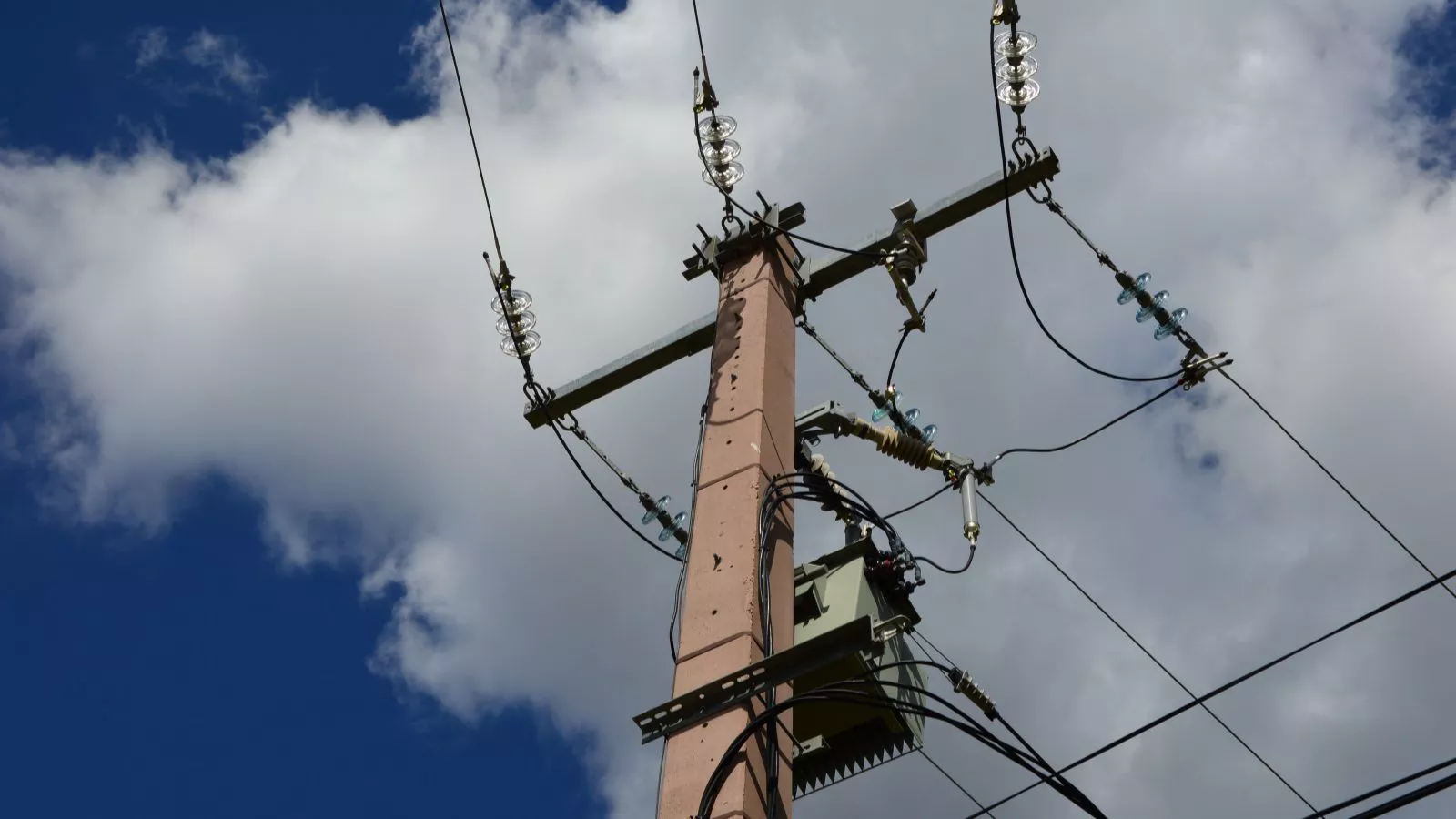
Overhead line fittings are mechanical and electrical accessories used to install, support, connect, anchor, suspend and protect conductors and cables in overhead power distribution networks. They form an important part of the infrastructure connecting power cables to poles, buildings, equipment and other parts of the distribution system.
Depending on the design of the network, overhead line fittings can include anchor clamps, suspension clamps, insulation piercing connectors, pre-insulated connectors, cable lugs, brackets, stainless steel bands and buckles, end caps and other cable accessories.
In low voltage aerial bundled cable (ABC) systems, fittings are particularly important because the cable must be mechanically supported while maintaining electrical insulation and reliable connections. Properly selected fittings help distribute mechanical loads, prevent cable movement and maintain the electrical integrity of the network.
For medium voltage and specialized overhead systems, fittings may also need to meet additional requirements for electrical insulation, mechanical strength, environmental resistance and installation safety. Therefore, overhead line fittings should always be selected according to the complete cable system rather than as individual components.
The term overhead line fittings covers a broad range of products. The exact configuration depends on the cable type, voltage level, pole structure and purpose of the connection. The following are some of the most common categories used in modern overhead distribution systems.
Anchor and suspension clamps are used to mechanically secure overhead cables to poles and other supporting structures. Anchor clamps are generally used where the cable needs to be terminated or tensioned, while suspension clamps support the cable along an overhead route.
For aerial bundled cable systems, the clamp should provide sufficient mechanical grip without damaging the insulation. The selected model should correspond to the cable diameter, cable construction and required mechanical load.
· Anchor clamps: Secure and tension overhead cables at termination points.
· Suspension clamps: Support cables between termination points while allowing appropriate movement.
· Pole brackets: Provide the structural connection between clamps and utility poles.
JERA provides a range of overhead anchor and suspension clamps designed for low and medium voltage cable deployment.
Insulation piercing connectors (IPCs) are widely used to create branch connections in insulated overhead cables without removing the cable insulation beforehand. During installation, specially designed conductive teeth penetrate the insulation and establish electrical contact with the conductor.
This design can simplify field installation and reduce the need for manual insulation stripping. IPCs are particularly common in low voltage ABC networks, street lighting systems and service connections.
JERA's overhead IPC product range includes connectors for one-core LV ABC, bare-to-insulated cable connections, multi-tap applications, medium voltage ABC systems and surge arrester connections. JERA states that its IPC products include models conforming to NFC 330-20 and EN-50483-4 Class A, with underwater voltage withstand testing for applicable products.
For more information, see JERA's overhead insulation piercing connection product range.
Termination and connection fittings are used where overhead cables need to be connected to equipment, extended, terminated or transitioned to another section of a power distribution network.
Common products include pre-insulated cable lugs, pre-insulated sleeves and mechanical connectors. These fittings help establish reliable electrical and mechanical connections while protecting the conductor from environmental exposure.
For outdoor networks, the connector design should be compatible with the conductor material and cable construction. For aluminum and copper conductors, suitable contact materials or bimetallic designs may be required to achieve reliable electrical performance.
Stainless steel bands and buckles are commonly used to secure cable accessories, brackets and other components to utility poles. They provide a flexible fastening solution for overhead and outdoor cable infrastructure.
The grade, width and thickness of the stainless steel band should be selected according to the installation environment and mechanical requirements. Outdoor projects may require enhanced corrosion resistance, particularly in coastal or industrial environments.
Pole brackets provide the mechanical interface between overhead cable fittings and the supporting pole. They can be used together with anchor clamps, suspension clamps and other cable deployment accessories.
A suitable bracket must provide adequate mechanical strength and maintain stable positioning during wind, vibration, thermal expansion and other environmental stresses. The bracket configuration should also match the pole structure and fitting dimensions.
Some overhead distribution systems require additional protection against transient overvoltage. Surge arresters and related fittings can be integrated into overhead cable networks to help protect electrical equipment and cable infrastructure from excessive voltage events.
JERA's product portfolio includes overvoltage protection and current limitation products for low and medium voltage cable systems, including surge arrester-related solutions.
End caps are used to protect exposed cable ends from moisture, dust and other environmental contaminants. They are small components, but they can play an important role in maintaining the protection of cable systems during installation and operation.
JERA offers end caps in different cable size ranges for overhead cable applications. The correct size should be selected according to the cable diameter and application requirements.
Overhead line fittings are used in a wide range of power distribution and infrastructure projects. Their function may vary from mechanical cable support to electrical connection and protection.
Low voltage overhead distribution networks are one of the most common applications for overhead line fittings. Utility companies use clamps, connectors, brackets and other accessories to deploy ABC cables and connect customers to distribution lines.
The fittings must provide reliable mechanical support and electrical connection while remaining suitable for long-term outdoor exposure.
Aerial bundled cable systems combine insulated conductors into a compact overhead cable configuration. They require dedicated accessories for anchoring, suspension, branching and termination.
Common ABC accessories include anchor clamps, suspension clamps, insulation piercing connectors, pre-insulated connectors, end caps and pole mounting hardware. Using components designed for the specific ABC cable configuration helps maintain mechanical and electrical system performance.
Street lighting networks often require a large number of branch connections between the main overhead cable and individual lighting circuits. IPC connectors can simplify these branch connections where compatible insulated cables are used.
Fast installation is especially valuable for municipal projects because contractors may need to complete a large number of similar connections across an extensive distribution area.
Overhead distribution remains an important solution for extending electricity supplies to residential and rural areas. Reliable cable fittings help utilities and contractors install distribution lines efficiently while maintaining mechanical stability and electrical safety.
For these projects, procurement teams may prioritize easy installation, standardized components, competitive pricing and stable supply from the manufacturer.
Industrial facilities, commercial buildings and infrastructure projects may also use overhead cable systems for power distribution. In these environments, fitting selection should consider the electrical load, cable structure, mechanical stress and environmental conditions of the installation.
Renewable energy projects, including distributed solar power systems and microgrids, may require overhead cable accessories for power distribution and connections. Components used in these environments should be selected for the actual cable configuration and outdoor conditions of the project.
The performance of overhead line fittings depends heavily on the materials and manufacturing processes used. Since many fittings operate outdoors for extended periods, resistance to corrosion, UV exposure, moisture, vibration and temperature changes is important.
Insulating bodies used in cable connectors and clamps should provide suitable electrical insulation and environmental resistance. UV-resistant polymer materials are particularly important for fittings installed outdoors.
Material selection should consider the expected temperature range, UV exposure, mechanical requirements and applicable flame or insulation requirements of the project.
Electrical connectors require conductive contact elements capable of maintaining stable electrical performance. Depending on the product design, copper, aluminum or tin-plated conductive materials may be used.
For connections involving different conductor materials, suitable bimetallic contact designs can help provide compatibility between aluminum and copper conductors.
Bolts, washers, bands and other mechanical components used outdoors should provide suitable corrosion resistance. Stainless steel is commonly used where long-term resistance to rust and environmental exposure is required.
A reliable China overhead line fittings manufacturer should have a documented quality control and testing process. Depending on the product category, relevant standards may include EN 50483, NF C 33-020, IEC 61238-1 and IEC 60099-4.
JERA states that its quality system operates according to ISO 9001 and that its laboratory performs electrical, environmental, mechanical and chemical-related validation within applicable testing scopes. The company also cooperates with third-party laboratories and inspection organizations for relevant testing and certification.
China has a large manufacturing base for electrical hardware and power distribution accessories. However, not every supplier offers the same level of manufacturing capability, testing, customization or technical support. Before placing an order, buyers should evaluate the supplier based on the following factors.
First, check whether the manufacturer offers the complete range of fittings required for your project. Buying anchor clamps, suspension clamps, connectors and termination products from a supplier with compatible product families can simplify procurement and technical coordination.
The supplier should also be able to confirm cable diameter ranges, conductor materials, voltage levels, installation methods and applicable product standards.
A direct factory can provide better visibility into production, quality control and lead times than a trading company that relies entirely on external suppliers.
When evaluating a China overhead line fittings manufacturer, ask whether the company owns its production facilities, conducts product assembly in-house and has dedicated R&D or engineering capabilities.
Electrical fittings should be evaluated through appropriate mechanical, electrical and environmental testing. A professional manufacturer should be able to provide product test reports and explain the applicable standards for the products supplied.
JERA operates an on-site testing laboratory and states that its quality control process covers raw materials, semi-finished products and finished products. The company also works with qualified third-party laboratories for relevant testing and certification.
For distributors, utilities and project contractors, standard products may not always meet local specifications. OEM and ODM capability can therefore be an important supplier-selection factor.
Customization may involve product dimensions, materials, packaging, labels, markings, cable ranges or other project-specific requirements. Buyers should confirm the manufacturer's ability to support these requirements before mass production.
International buyers should also evaluate the manufacturer's experience with overseas markets, documentation, packaging and technical communication. A supplier familiar with international utility and EPC projects can usually provide more effective support during product selection and project implementation.
JERA LINE is a China-based manufacturer specializing in cable infrastructure products for low and medium voltage overhead and underground cable networks. The company operates its factory in Yuyao, Ningbo, China, with R&D, production and assembly capabilities.
JERA's product portfolio covers several important categories used in overhead cable infrastructure, including overhead anchor and suspension clamps, insulation piercing connectors, overvoltage protection products, overhead termination and connection products, and related cable accessories.
JERA operates as a direct manufacturer rather than simply sourcing products from unrelated factories. This allows the company to control product development, manufacturing and quality inspection within its own production system.
JERA combines research and development with manufacturing and assembly. The company provides OEM and ODM services for customers requiring customized products or private-label solutions.
This capability can be useful for distributors and utility contractors that require specific product configurations, packaging or branding for different markets.
JERA focuses on cable infrastructure for both low and medium voltage applications. Its product groups cover cable deployment, electrical connection and termination, as well as overvoltage protection and current limitation.
JERA states that its quality management system follows ISO 9001 and that its products are developed and tested against applicable international standards. The company's stated testing scope includes electrical performance, environmental performance, mechanical properties and chemical composition analysis.
JERA serves customers in international markets and develops products according to different regional requirements. For buyers sourcing overhead line fittings from China, this international experience can help simplify communication around technical specifications, testing requirements and product customization.
If you are looking for a China manufacturer capable of supplying compatible overhead cable accessories rather than a single standalone fitting, JERA can provide a broader product solution for low and medium voltage cable infrastructure.
The price of overhead line fittings can vary significantly depending on product type, material, technical specifications and order volume. Comparing only the unit price may not provide an accurate picture of the total procurement cost.
Simple cable accessories generally have a different cost structure from multi-component connectors or mechanical clamps. Products requiring specialized piercing contacts, sealing structures or torque-controlled bolts may have higher manufacturing costs.
The materials used for conductive contacts, polymer bodies, stainless steel hardware and other components directly affect product cost. Higher corrosion resistance or specialized material requirements may increase the price.
Fittings designed for different conductor sizes may require different component dimensions and tooling. Products with wider cable application ranges or specialized configurations may also have different pricing.
Products intended for utility and infrastructure projects may require additional type testing, third-party certification or project-specific verification. These requirements can affect the final procurement cost.
Large-volume orders can provide better manufacturing economics, while OEM packaging, customized tooling, special materials or private labeling may add development and production costs.
For this reason, buyers should provide the manufacturer with the cable type, conductor size, voltage level, application, expected quantity and relevant standards when requesting a quotation. This allows the supplier to recommend the correct fitting and provide a more accurate price.
Overhead line fittings are used to support, anchor, suspend, connect, terminate and protect cables in overhead power distribution networks. Common products include anchor clamps, suspension clamps, insulation piercing connectors, termination fittings, brackets and other cable accessories.
Common overhead line fittings include anchor clamps, suspension clamps, insulation piercing connectors, pre-insulated connectors, cable lugs, pole brackets, stainless steel bands and buckles, end caps and surge protection accessories. The required products depend on the cable system and application.
Yes. Chinese manufacturers supply overhead cable fittings to international markets, but buyers should verify that the selected products meet the technical specifications and standards required in their target market. Product testing, certification, conductor compatibility and environmental requirements should all be confirmed before purchasing.
Many manufacturers provide OEM and ODM services. Depending on the manufacturer, customization may include dimensions, materials, cable application ranges, product markings, packaging and private-label requirements. Technical requirements should be confirmed before production.
To obtain an accurate quotation, provide the cable type, conductor material, conductor cross-sectional area or diameter, voltage level, application, fitting type, required quantity, applicable standards and any customization requirements. Photos, drawings or existing product references can also help the manufacturer identify the correct solution.
The fitting must match the cable's diameter, conductor material, construction and mechanical requirements. An unsuitable fitting may result in poor mechanical holding, unstable electrical contact or damage to the cable. Therefore, product selection should always be based on the actual cable specification.
The applicable standard depends on the product and market. Standards used for relevant cable accessories can include EN 50483, NF C 33-020, IEC 61238-1 and IEC 60099-4. Buyers should confirm the exact standard and testing requirements applicable to their specific product and project.
China overhead line fittings can provide a practical solution for utilities, distributors, EPC contractors and electrical infrastructure projects looking for reliable cable deployment and connection components. However, selecting the right supplier requires more than comparing prices.
Product compatibility, mechanical strength, conductive materials, insulation performance, corrosion resistance, environmental protection, testing capabilities and manufacturing experience should all be considered before placing an order. For large projects, the ability to provide compatible product families and customized solutions can also simplify procurement and installation.
JERA LINE is a direct manufacturer in Yuyao, Ningbo, China, specializing in low and medium voltage cable infrastructure products. Its product range covers overhead anchor and suspension clamps, insulation piercing connectors, termination and connection products, overvoltage protection products and other cable accessories. JERA combines R&D, manufacturing, assembly and quality testing to support customers with standard and customized solutions.
If you are sourcing overhead line fittings from China and need help selecting suitable products for your cable system, contact JERA with your cable specifications and project requirements. The technical team can help identify the appropriate fitting configuration and provide a quotation based on your application.












.png)